Selected work / engineering and practical AI
See the thinking.
Then the work.
Systems become useful when the technical decisions and the operating reality fit together. These examples show my contribution and where the work was done.
Architecture illustration / not a project photograph
01 / Work through White Conveyors
From fragmented controls
to a modular platform.
Garment-handling equipment had fragmented controls across product lines. A modular platform created a common technical foundation while retaining the interfaces each application needed.
My roleSenior Controls Engineer, with responsibility for controls engineering at White Conveyors.
What I worked onModular machine controls, device interfaces, machine-to-machine communication and the connection to software systems.
Engineering approachEaton controls, IFM and IO-Link devices, OPC interfaces and C#/.NET integration.
AttributionThis work was delivered through my employment at White Conveyors. It is part of my personal engineering experience.
Architecture illustration / not a project photograph
02 / Work through Millennium and Americold
Lead across
the whole operation.
Engineering management and enterprise architecture require a view of the whole operation: team responsibilities, standards, vendors, interfaces and the work that reaches the field.
Millennium Control SystemsEngineering Manager, Controls & Automation. Led an engineering team delivering industrial controls and integration work.
AmericoldEnterprise Automation Architect. Worked on automation standards, cold-storage systems integration, vendor access and industrial telemetry.
How I leadStay close enough to the technical details to make useful decisions, while giving people clear responsibilities and a delivery path.
AttributionThese examples describe engineering roles with previous employers.
Architecture illustration / not a project photograph
03 / Systems for my own operating businesses
Connect the inquiry
to the next useful action.
Running businesses makes missed calls, scattered records and repetitive handoffs concrete problems. I build AI and automation around those operating needs.
Example: dealership voice workflowA voice agent designed to answer customer calls, check vehicle inventory and capture an inquiry for follow-up.
Example: parts and payment workflowsCustomer intake, invoices and pickup information connected through business automation.
The principleGive AI a defined job, useful business context and a clear handoff to a person.
Where to go nextExplore business automation with DDG Automation ↗
How I solve problems
Good systems start with good judgment.
What I check. Why it matters. What I would build.
Illustrative graphic / From my writing
01 / Plan
Know the plant before you change it.
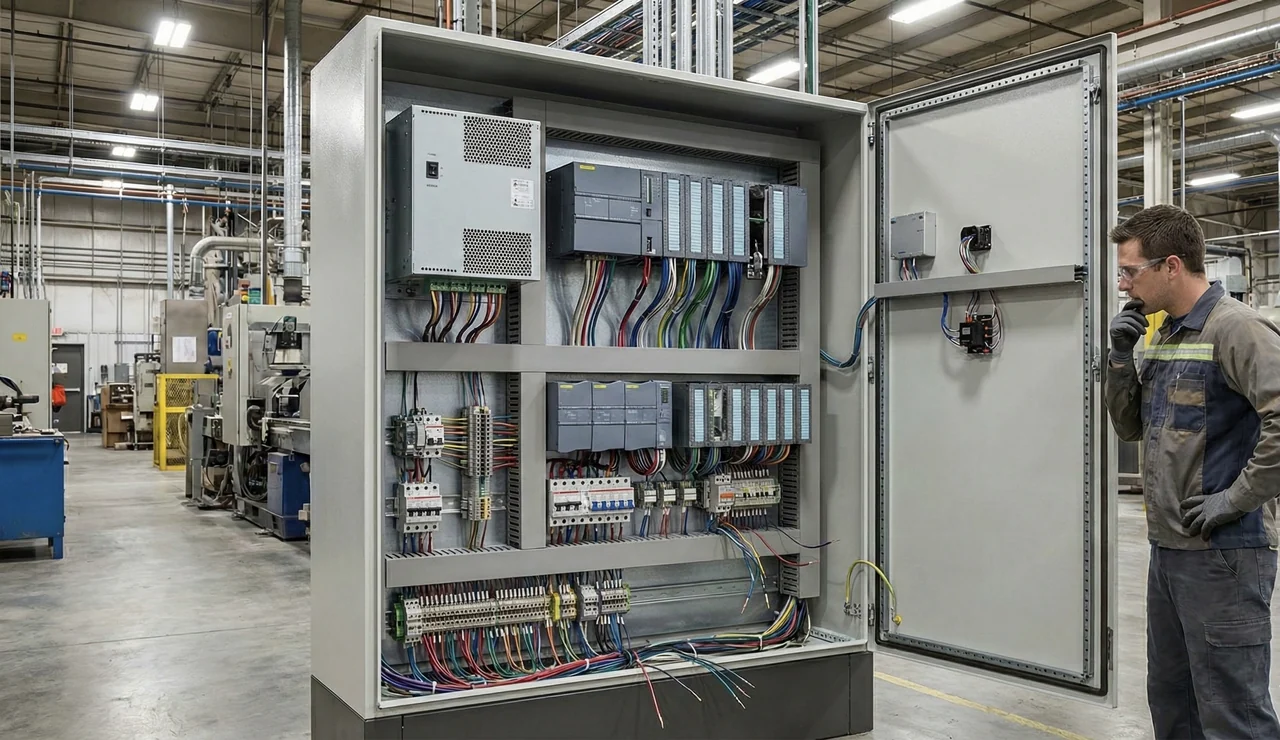
A clean drawing can still leave important questions unanswered. Before a build, I want the scope checked against the equipment, the operating sequence and the people who run it.
What I check
Device and I/O lists, network architecture, integration boundaries, interlocks, the commissioning sequence and which drawing and software revisions are approved.
Why it matters
A missing requirement discovered in the field becomes somebody’s redesign, delay or change order. The scope needs to describe the operation people are actually asking us to change.
What I would build
A clear system map, a field-checked specification and an agreed process for recording changes and checking the result.
Illustrative graphic / From my writing
02 / Connect
Trace the fault across the boundary.
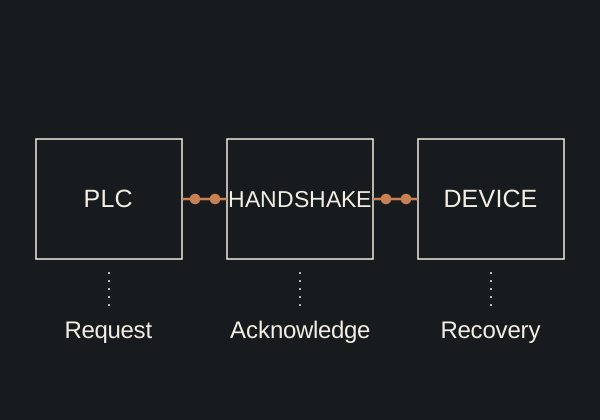
When new equipment meets older controls, the connection deserves the same attention as the equipment. I want to understand what each side expects and what happens when that expectation is not met.
What I check
The operating sequence, signals, timing, interlocks, ownership of shared data, and the behavior during interruption and recovery.
Why it matters
A device can look healthy while a missing or late signal stops the surrounding process. Replacing hardware may leave the communication problem untouched.
What I would build
An interface map and a focused acceptance sequence covering normal operation, missing information and recovery.

Illustrative graphic / From my writing
03 / Apply AI
Give the team knowledge they can use.
The person who knows every quirk of a machine is valuable. The operation also needs a way to keep that knowledge available across shifts and changes in the team.
What I check
Approved drawings, manuals, maintenance history, operating notes, revision ownership and the questions technicians actually need answered.
Why it matters
People need information they can trust, find and maintain. An AI answer is useful only when a qualified person can check it against the source.
What I would build
Start with a bounded knowledge workflow: organize approved records, define ownership, and evaluate a supervised assistant that retrieves relevant material with source references. Test it with representative questions before widening its job.
Engineering leadership opportunities
Technical depth.
Operating perspective.
I am interested in engineering leadership that connects teams, systems and the business outcome. Share the responsibilities, location, travel expectations and compensation range.
- Engineering managementTeam direction, technical decisions and delivery.
- Automation architectureControls, industrial data and OT/IT interfaces.
- Practical business AIUseful workflows tied to real operating needs.
A good conversation is a beginning